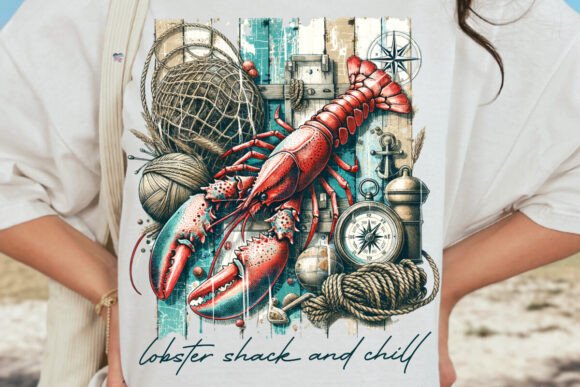
Why the Lobster Shack PNG Fisherman Aesthetic Deserves a Careful Eye Before You Print
There is something about the Lobster Shack PNG Fisherman Aesthetic that pulls people in. Maybe it is the worn wooden docks, the weathered hands of a fisherman pulling in a trap, or the way coastal light hits a lobster boat at dawn. This style combines rustic maritime charm with a handcrafted, watercolor feel that works beautifully on apparel, home décor, and gifts. But as with any popular digital design trend, there are pitfalls that can turn a promising project into a frustrating experience. If you are buying or using this type of artwork, understanding what to watch for will save you time, money, and a lot of reprints.
The First Trap: Assuming a PNG Is Ready to Print as-Is
Many creators download a Lobster Shack PNG Fisherman Aesthetic file and immediately send it to their printer or upload it to their print-on-demand store. That is a mistake. A PNG file may look crisp on your screen, but resolution, color profile, and background handling all matter differently for physical production. A design that appears sharp on a monitor can come out blurry or pixelated on a mug or sweatshirt if the file dimensions are too small or the DPI is low.
Before you use any PNG, check the actual pixel dimensions. A minimum of 300 DPI at the final print size is a good baseline. For a standard 11-ounce mug, that means around 3300 x 2100 pixels or larger. If the Lobster Shack PNG you are considering comes in at 1500 x 1500 pixels, it may look fine on a small sticker but fall apart on a hoodie.
Also, watch for transparency issues. Most PNGs include a transparent background, which is great for layering. But some file sellers accidentally leave rough edges, stray pixels, or incomplete transparency around the design. Zoom in close to check the edges of the lobster, the rope coils, or the fisherman's silhouette. A clean vector-style PNG will have smooth edges. A sloppy one will show white or jagged fringes that scream "low quality" on a printed garment.
Confusing Digital Art with a Font: A Common Misunderstanding
Some creators see the words "Lobster Shack" in a product title and assume they are buying a font. The description makes it clear: this is a PNG image, not a font. That distinction matters because a PNG cannot be used to type out custom text. You cannot change the wording, resize individual letters, or edit the color of one element without editing the entire file in software like Photoshop or Procreate. If you need flexibility with text, you will need a font or a layered file format such as PSD or SVG. The PNG format is best when you want a specific, ready-to-use graphic that does not require customization.
If you do want to add your own text around the design, you can absolutely do that in your design software. Just place the PNG as a graphic layer and add your own typography around it. Many creators do exactly that to create custom signs, T-shirts, or greeting cards that combine the fisherman aesthetic with their own message. Just remember that the PNG itself is a fixed visual, not a typing tool.
Overlooking License Terms: What "Physical or POD Only" Really Means
One of the most common and costly mistakes people make with digital design files is ignoring the usage license. The Lobster Shack PNG Fisherman Aesthetic comes with clear terms: you cannot resell the file itself. That means no listing the PNG in your own Etsy shop as a digital download, no bundling it into a pack you sell to other creators, and no giving it away as a freebie to build your email list unless the license explicitly allows that. The intended use is for physical products and print-on-demand items only.
Why does this trip people up? Because it is easy to think, "I bought it, so I can do what I want with it." But the creator of this artwork has set these rules to protect their own work and income. Violating them can lead to takedown notices, account suspension on platforms like Etsy or Amazon, and even legal action. The sellers check regularly. The warning is not a suggestion; it is a boundary.
A better approach is to treat the license like a recipe. You can bake the cake and sell slices, but you cannot sell the recipe card as your own. Keep that distinction clear in your mind, and you will stay on the right side of the terms while building your own product line.
Ignoring Print Method Compatibility
The Lobster Shack PNG Fisherman Aesthetic is versatile. The product description mentions sublimation and direct-to-garment (DTG) printing, both of which handle PNG files well. But not every print method works the same way. Sublimation, for example, requires a white or light-colored substrate for the colors to show up correctly. The watercolor brushstrokes and coastal tones in this design look stunning on a cream or heather grey T-shirt. On a dark navy or black shirt, the same design may appear muddy or invisible, depending on the print method.
If you are using sublimation, you also need a polyester or poly-coated surface. Cotton shirts will not hold sublimation ink. That is a fact that surprises many beginners who try to sublimate onto a basic cotton tee and end up with a faint, washed-out result. For cotton garments, DTG or heat transfer vinyl is the better choice. Always match the print method to the material, not the other way around.
The design itself, with its watercolor aesthetic, works best on soft, textured backgrounds that mimic the feel of beach-worn paper or linen. That is something to consider when choosing products. A glossy ceramic mug might not showcase the brushstroke details as well as a matte-finish metal sign or a canvas tote bag. Test small runs on different surfaces before committing to a large inventory.
Downloading Without Checking File Integrity
The Lobster Shack PNG is delivered as an instant digital download inside a zip folder. That is convenient, but it also means you need to unzip the folder before you can use the file. Some operating systems handle zip files fine, others require third-party software. A surprisingly common mistake is trying to upload the zip file directly to a print-on-demand platform. It will not work. You must extract the PNG first.
After unzipping, open the PNG to confirm it looks correct. Occasionally, a file can become corrupted during download, especially on slow or unstable internet connections. If the design shows artifacts, missing sections, or strange color shifts, download it again and check your internet connection. Taking thirty seconds to verify the file now saves hours of frustration later when a customer receives a defective product.
Rushing the Design Layout
Even a beautiful Lobster Shack PNG Fisherman Aesthetic can look awkward if you place it poorly on a product. A common beginner mistake is centering a tall vertical design on a wide horizontal surface like a hoodie back. That leaves large empty spaces on the sides and makes the overall composition feel unbalanced. Similarly, placing a small lobster illustration too high on a mug means the handle covers part of the design on the other side.
Take time to visualize the final product. Use mockup templates before ordering samples. Consider the natural eye flow of the design. A watercolor fisherman scene with sweeping brushstrokes often looks best when it has room to breathe. Crowding it with large text or busy backgrounds defeats the aesthetic's rustic, coastal charm.
If you are creating apparel, think about where the design sits on the body. Chest-level placement is standard for T-shirts, but a larger design on the back can make a stronger statement with this nautical theme. For home décor items like wall art, the PNG's transparent background allows you to layer it over textured paper or wooden backgrounds for an authentic vintage maritime look.
Forgetting That Digital Files Are Tools, Not Final Products
A PNG file is an ingredient. It is not the finished meal. Some creators expect that buying the Lobster Shack PNG Fisherman Aesthetic means they can upload it and sell it immediately with no additional work. While that is technically true for some print-on-demand setups, the most successful sellers treat the file as a starting point. They adjust the size for each product, test color variations, combine it with complementary elements, and ensure the resolution matches the print surface.
The difference between a generic-looking product and a polished, professional item often comes down to those extra steps. A slightly faded watercolor lobster against a sandy background can feel like a cheap clipart if you do not position it thoughtfully. The same design, placed on a weathered wood texture with a subtle shadow and a hand-drawn border, transforms into a premium piece of coastal art.
Checking Before You Commit
Before you purchase or use a Lobster Shack PNG Fisherman Aesthetic file, run through a quick checklist. Confirm the resolution is high enough for your intended print size. Verify that the license allows the products you want to make. Test the file on a sample product before listing it for sale. Make sure your print method and material are compatible. And always, always unzip and inspect the file before you rely on it.
These steps take very little time, but they prevent the kind of mistakes that lead to wasted materials, unhappy customers, and lost revenue. The Lobster Shack aesthetic is genuinely appealing. It evokes the salt air, the creak of a dock, and the honest labor of a fishing life. Treat the digital file with the same care you would give a physical piece of art, and your products will reflect that respect.